 fortuna@baiyiadhesine.com


 中文简体
中文简体 Español
 عربى
عربىProduct category
Contact Us
About Us
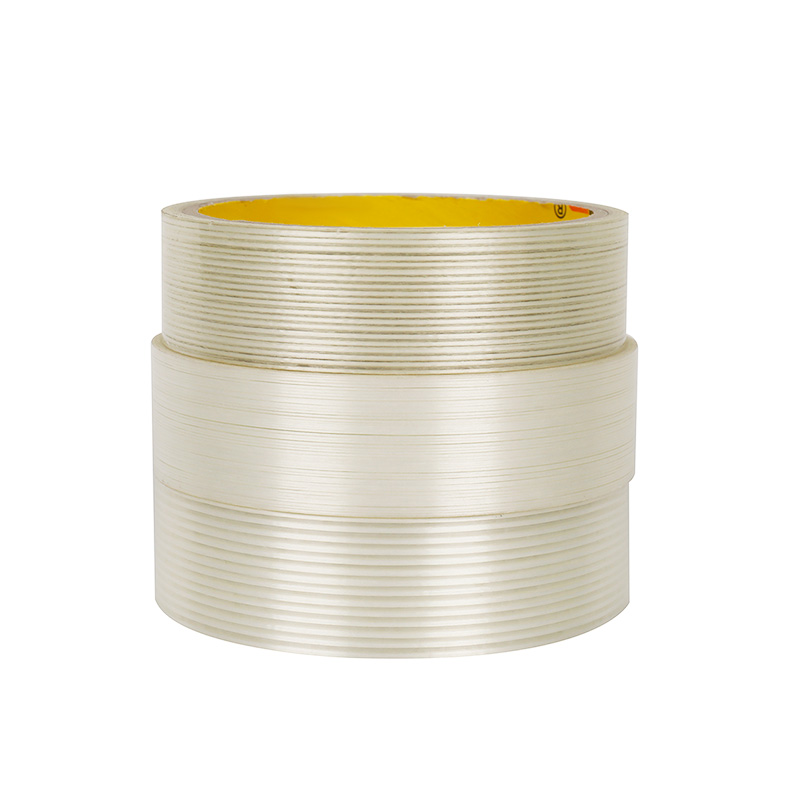
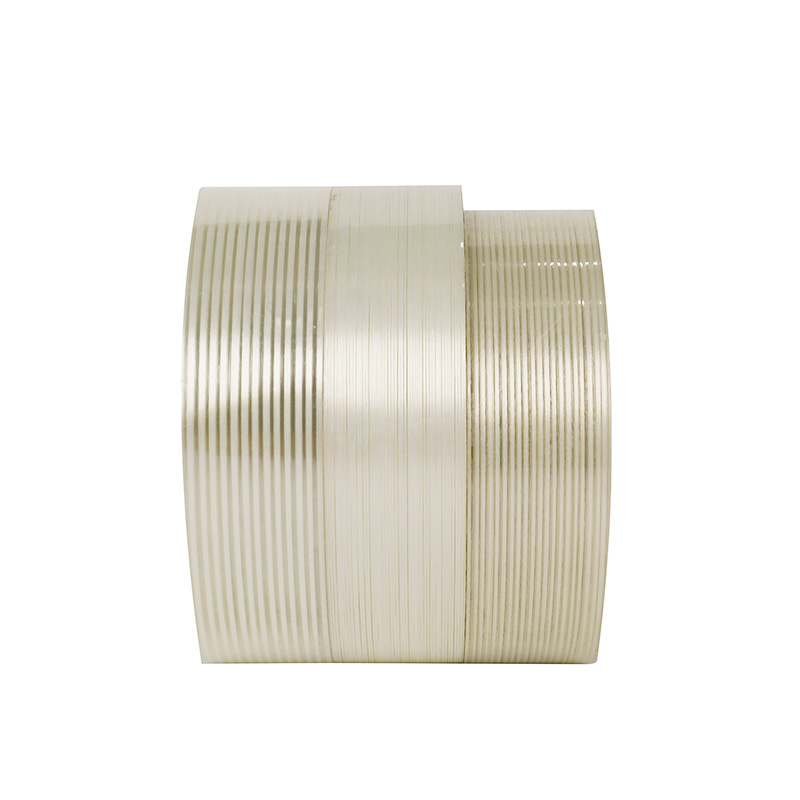
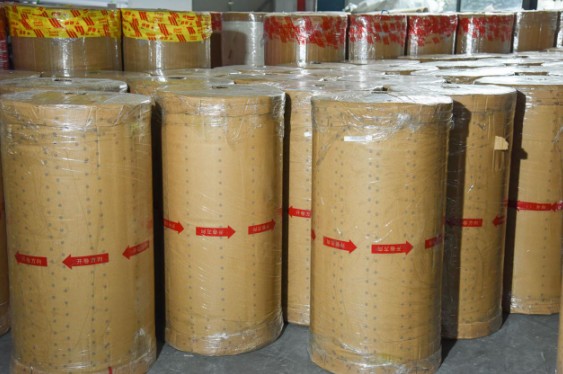
As a China Fiberglass Tape Manufacturer and Custom Fiberglass Tape Factory, Our company has a complete range of products with guaranteed quality, including Bopp film (for coating bopp tape jumbo rolls and making bags), various tape jumbo rolls, glue, bopp tape, masking tape, double-sided tape, duct tape, kraft paper tape, aluminum foil tape, PVC tape, PE stretch film, etc. All of our products meet international quality standards and are highly appreciated by various countries and markets.
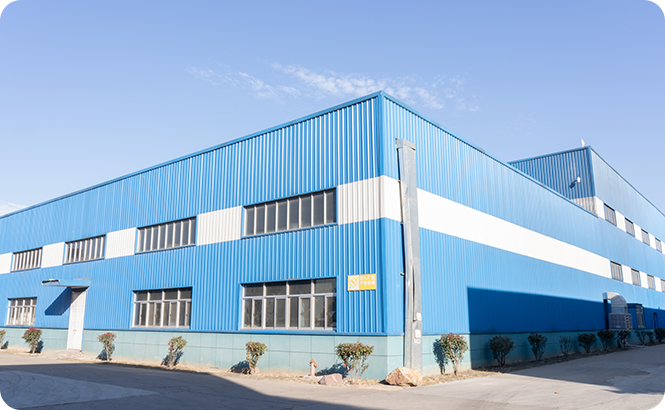
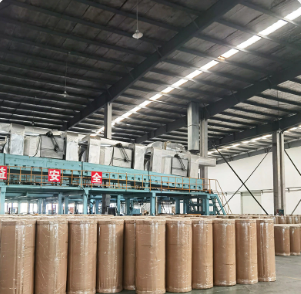
In 2005, we established a factory, Zhejiang Baiyi Adhesive Products Co., Ltd. With 4 Bopp film production lines, independent glue production workshop, 16 Bopp coil production lines and 12 slitting machines, we are a leading manufacturer in China's tape industry. In 2008, our company set up a warehouse in Yiwu City. We always adhere to the business philosophy of "first-class quality, best service". Your satisfaction is our goal, and our motivation is to do better. We are very happy to serve you and do business with your valued company!
Certificate
-
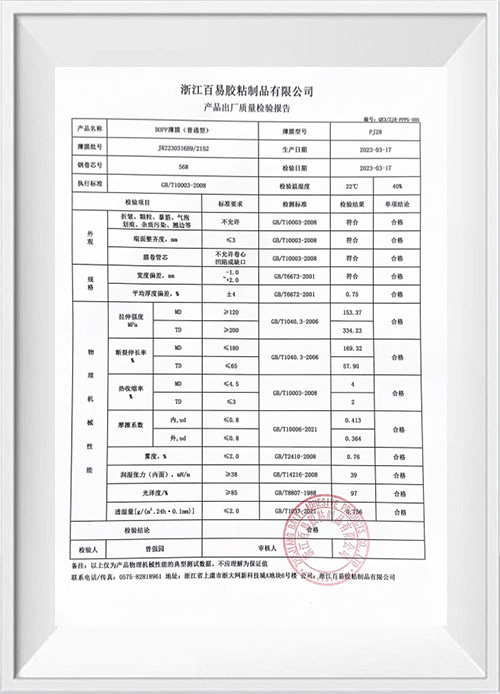 Thickness Film Report
 -
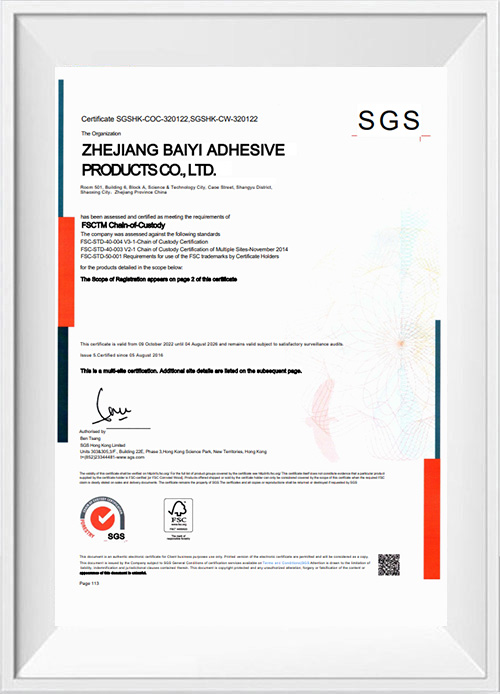 FSC
FSC -
 Quality Management System
 -
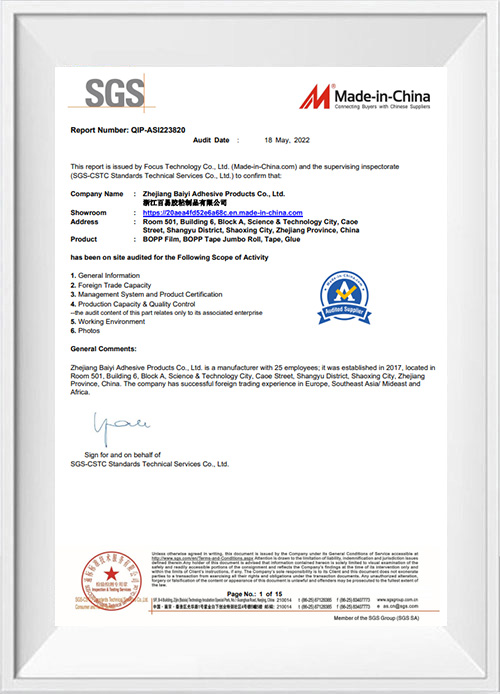 QIP-ASI223820
 -
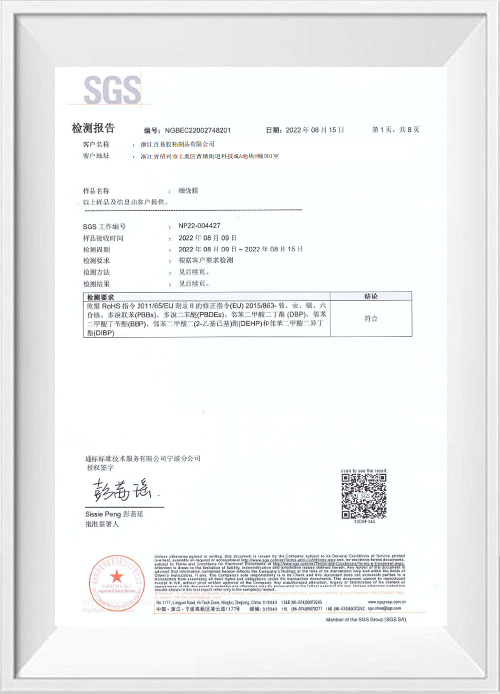 SGS Report on Winding Film
News

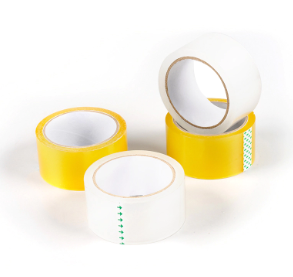
Industry Knowledge Extension
What are the differences between self-adhesive and non-self-adhesive fiberglass tape?
| Comparison Dimension | Self-Adhesive (Self-adhesive) | Non-Self-Adhesive (Non-self-adhesive) |
| Application Method | Peel off the backing paper and apply directly; operation is simple | Requires additional glue application; more steps involved |
| Suitable Scenarios | Large areas, drywall, quick installations | Situations requiring special glue or high-temperature curing |
| Initial Strength | Instantly adhesive upon application; immediate setting | Strength depends on glue curing time |
Self-adhesive and non-self-adhesive fiberglass tape are two different application methods. Choosing the right type can avoid application difficulties.
1. Ease of Application:
Self-adhesive: The back is coated with pressure-sensitive adhesive; simply peel off the protective paper to apply. It's very time-saving and labor-saving, especially suitable for large areas or high-altitude work.
Non-self-adhesive: Requires the application of special adhesive or emulsion, involving more steps and requiring more stringent environmental conditions.
2. Initial Strength:
Self-adhesive: Provides immediate bonding strength after application, suitable for scenarios requiring rapid support.
Non-self-adhesive: Bonding strength depends on the adhesive's drying time; usually, waiting for the adhesive to cure is required.
3. Surface Compatibility:
Self-adhesive: The adhesive formula is usually stable, suitable for most drywall surfaces.
Non-self-adhesive type: Different types of adhesives (such as high-temperature adhesives and water-resistant adhesives) can be selected according to specific needs, offering greater flexibility.
4. Advantages of Zhejiang Baiyi:
Our self-adhesive fiberglass tape (such as "fiberglass self-adhesive tape") uses high-quality pressure-sensitive adhesive, possessing excellent grip and dimensional stability, making it less prone to bubbling after application and ensuring a long lifespan.
Why do I always find air bubbles forming when using it on drywall?
| Cause Category | Specific Manifestation | Solution |
| Improper Surface Preparation | Dust, oil, or moisture on the wall surface | Thoroughly clean and dry the wall before application |
| Incorrect Installation Method | Uneven pressure or incomplete smoothing during application | Use a roller or squeegee to apply even pressure from the center outward |
| Tape Quality Issues | Traditional paper tape or low-quality tapes | Use glass fiber tapes manufactured by Zhejiang Baiyi, which offer better weather resistance and anti-bubble performance |
| Environmental Factors | High humidity or large temperature fluctuations during installation | Choose a dry, temperature-appropriate environment, or use moisture-resistant glue |
Air bubbles are a common problem during application, usually caused by poor adhesion or improper application methods.
1. Substrate preparation:
If the drywall surface has dust, oil, or is not completely dry, the tape will have difficulty bonding tightly to the substrate, preventing internal gas from releasing and forming air bubbles.
2. Application method:
Uneven force during application or failure to use a pressure roller to compact the tape can easily leave air gaps. It is recommended to use a professional pressure roller to push from the center outwards, ensuring that every inch of tape adheres to the wall surface.
3. Tape Type:
Compared to traditional paper tape, self-adhesive fiberglass tape, due to its uniform mesh structure and pressure-sensitive adhesive formula, is generally less prone to bubbling or wrinkling, making it easier to use.
4. Zhejiang Baiyi's Solution:
Our product line includes various specifications of fiberglass tape. You can choose the model suitable for your drywall thickness and width, and with professional application tools, completely solve the bubble problem.
How to Judge the Quality of Fiberglass Tape?
| Evaluation Dimension | Key Indicators |
| Appearance and Mesh | Uniform, straight mesh; clean white or transparent color without impurities |
| Material and Backing | Smooth backing film; white fiber yarn; evenly distributed pressure-sensitive adhesive layer |
| Tensile Strength | High tensile strength and wear resistance, not easily broken when stretched |
| Durability and Waterproofing | Resistant to aging, fading, or loss of adhesion over time |
| Zhejiang Baiyi Advantage | Equipped with 16 production lines and an independent glue workshop, strictly controlling raw material quality and meeting multiple international standards |
High-quality tape not only has strong adhesion but also maintains its performance over a long period.
1. Visual Inspection:
High-quality tape has a uniform and straight mesh, and the color is whitish or transparent, without any discoloration or dirt. Inferior tape often has uneven color and irregular mesh.
2. Material Inspection:
Good tape usually has a PET polyester base film with a smooth surface. The fiberglass material should be white yarn, and the pressure-sensitive adhesive layer should be evenly distributed.
3. Tensile Strength:
This is a key indicator. High-quality fiberglass tape is resistant to breakage after stretching and has high tensile strength. Zhejiang Baiyi uses high-quality fiberglass materials to ensure excellent tensile strength and abrasion resistance in its tapes.
4. Zhejiang Baiyi's Quality Commitment:
As a large factory with 4 BOPP film production lines and 16 BOPP roll production lines, Zhejiang Baiyi strictly controls the quality of raw materials, ensuring that every roll of tape meets international quality standards.
How to handle or repair damage to fiberglass tape?
| Remove Damaged Section | Carefully cut out the damaged or peeled-off area with a knife, ensuring a clean edge |
| Clean the Substrate | Remove any residue and dust from the wall surface, ensuring a smooth base |
| Reapply Tape | Cut a new piece of tape to the appropriate length (preferably the same specification from Zhejiang Baiyi) and apply it evenly |
| Reinforce Bonding | For areas bearing heavy loads, apply a thin layer of glue or putty on both sides of the tape for double protection |
| Zhejiang Baiyi Advantage | Our tapes have uniform thickness and strong adhesion, maintaining the same level of strength and durability after repair as the original application. |
Even the best tape can break due to external force or aging.
1. Cut off the damaged section:
First, carefully cut off the damaged or detached area with a knife, ensuring that the remaining tape edges are neat and smooth.
2. Re-apply:
Cut a new piece of fiberglass tape (such as the same specification produced by Zhejiang Baiyi) and apply it to the repaired area. For self-adhesive tape, simply remove the protective paper; for non-self-adhesive tape, reapply adhesive.
3. Enhanced Adhesion:
For areas subjected to heavy loads (such as wall joints), it is recommended to apply a thin layer of cement-based adhesive or self-adhesive to both sides of the tape, forming a double protective layer of "tape + glue".
4. Advantages of Zhejiang Baiyi:
Our tapes have uniform thickness and strong adhesive, maintaining their original high strength and durability even after repair.
Frequently Asked Questions (FAQ)
Q1:Is fiberglass tape really more durable than regular paper tape?
A:Yes, its tensile strength is typically 70%-80% higher than paper tape. However, during application, it may need to be compacted with a squeegee or used in combination with paper tape to prevent scratching the wall surface.
Q2:How good is the high-temperature resistance of fiberglass tape? In what high-temperature applications can it be used?
A:Fiberglass itself has extremely high heat resistance, typically withstanding temperatures from 550℃ to 700℃. Therefore, it is widely used in packaging high-temperature products, insulation for electronic and electrical products, and high-temperature potting.
Q3:Is fiberglass tape an environmentally friendly material? Does it have an odor?
A:Relatively speaking, it is environmentally friendly, containing no wood components (therefore it is not easily rotten), and usually does not have an unpleasant sawdust or glue smell.
Q4:What is the core business of Zhejiang Baiyi Adhesive Products Co., Ltd.?
A:The company mainly engages in the production and sales of adhesive products, including the manufacturing of rubber products, the sales of plastic products, and the production and import/export of high-performance fibers and composite materials such as adhesives and tapes.

-
 +86-575-82818961
+86-15906537907 -
 fortuna@baiyiadhesive.com
-
 Baiguan industrialZone,Shangyu District, Shaoxing City, Zhejiang Province, China



Copyright © Zhejiang Baiyi Adhesive Products Co., Ltd. All Rights
Reserved.
OEM/ODM Custom Fiberglass Tape Manufacturer
 浙ICP备17032394号