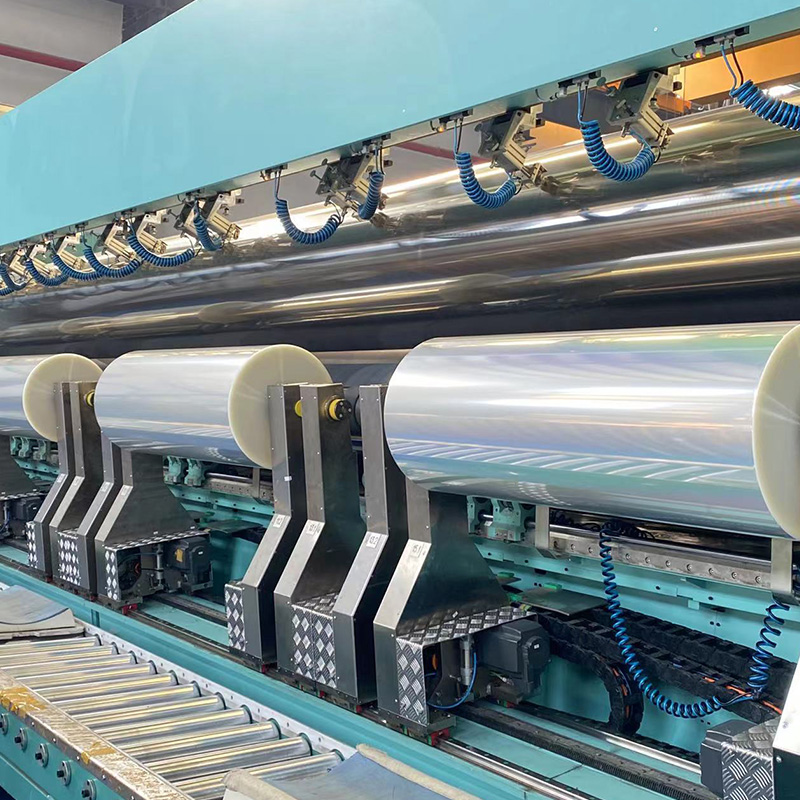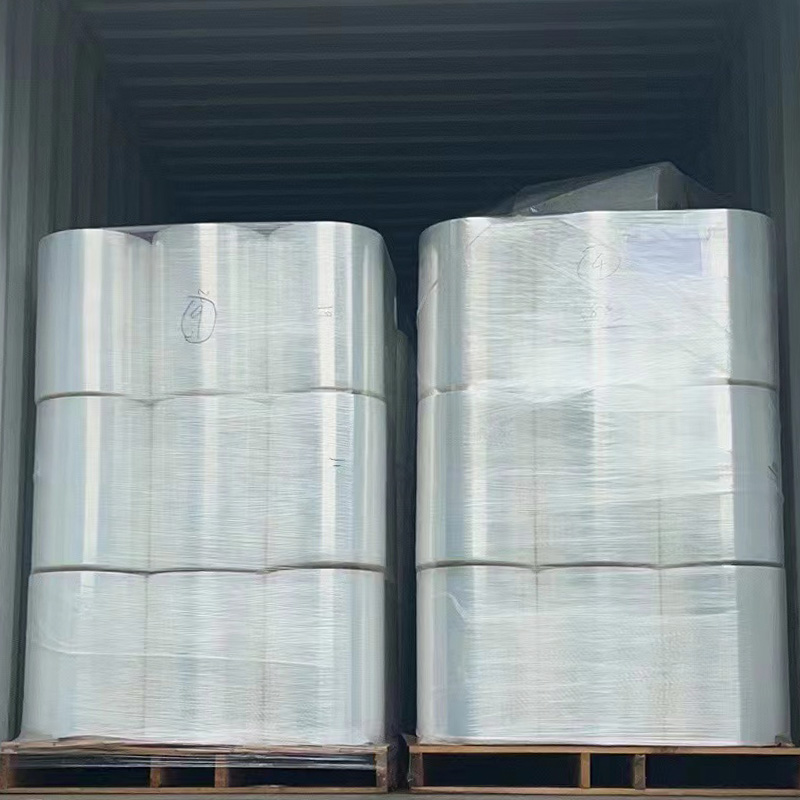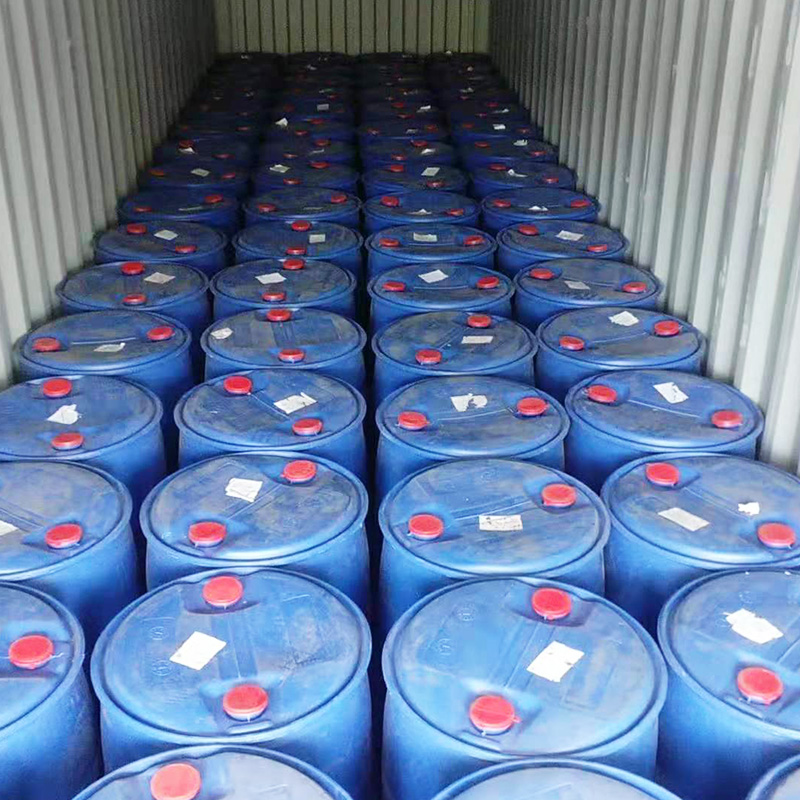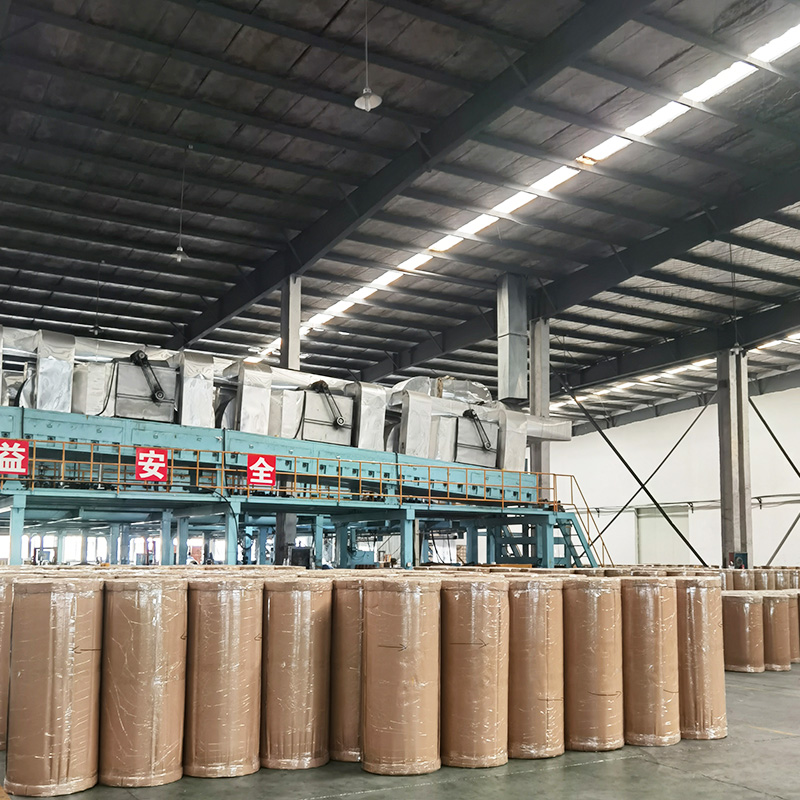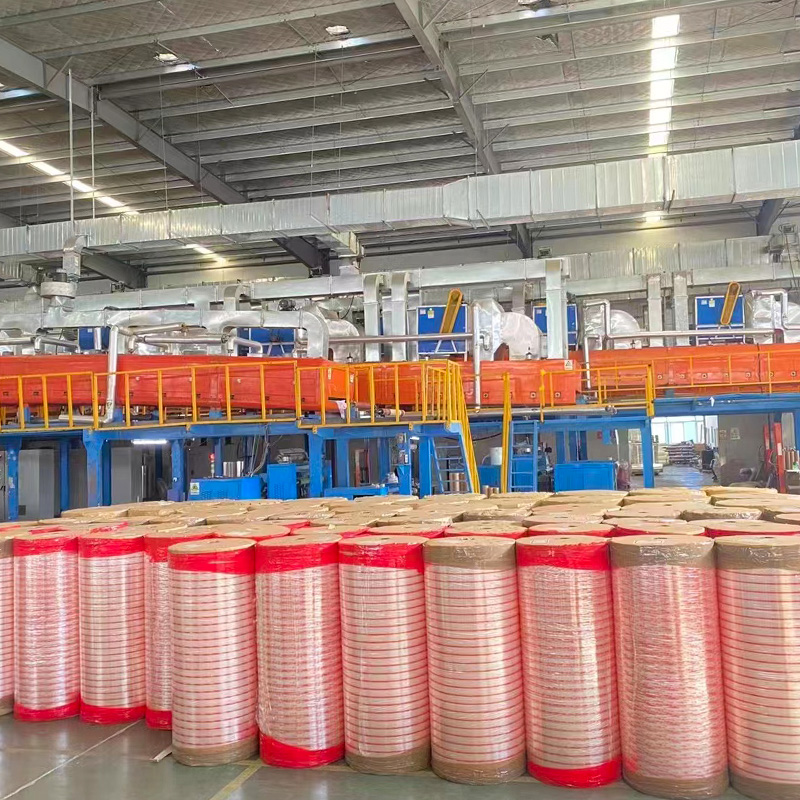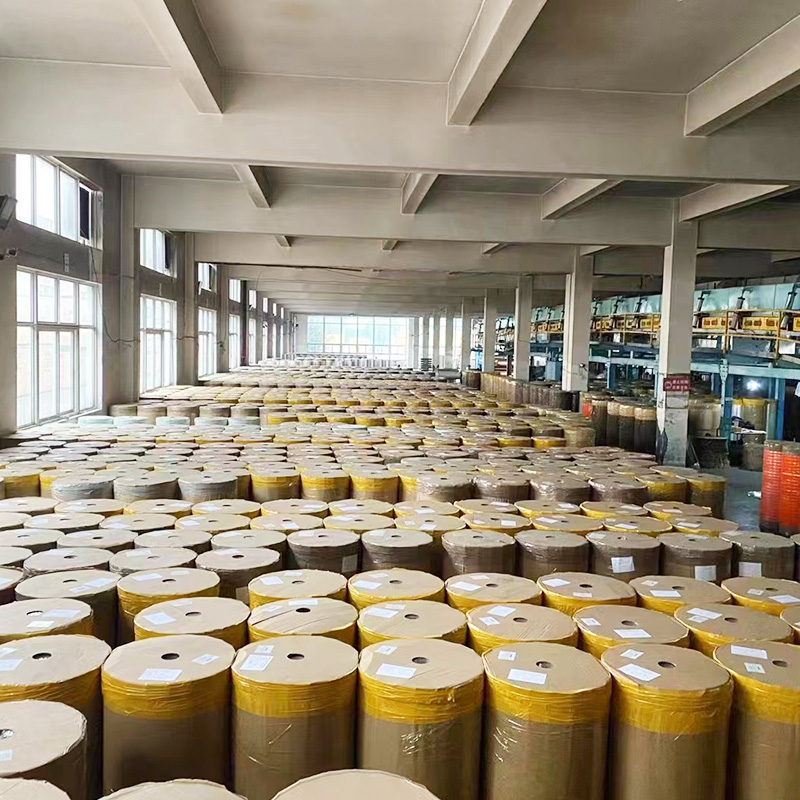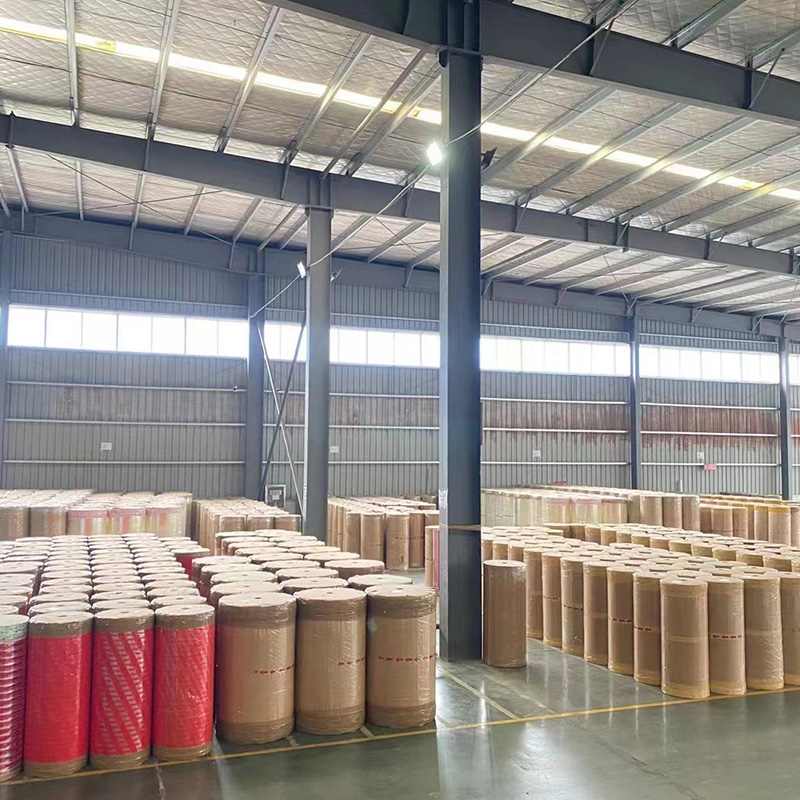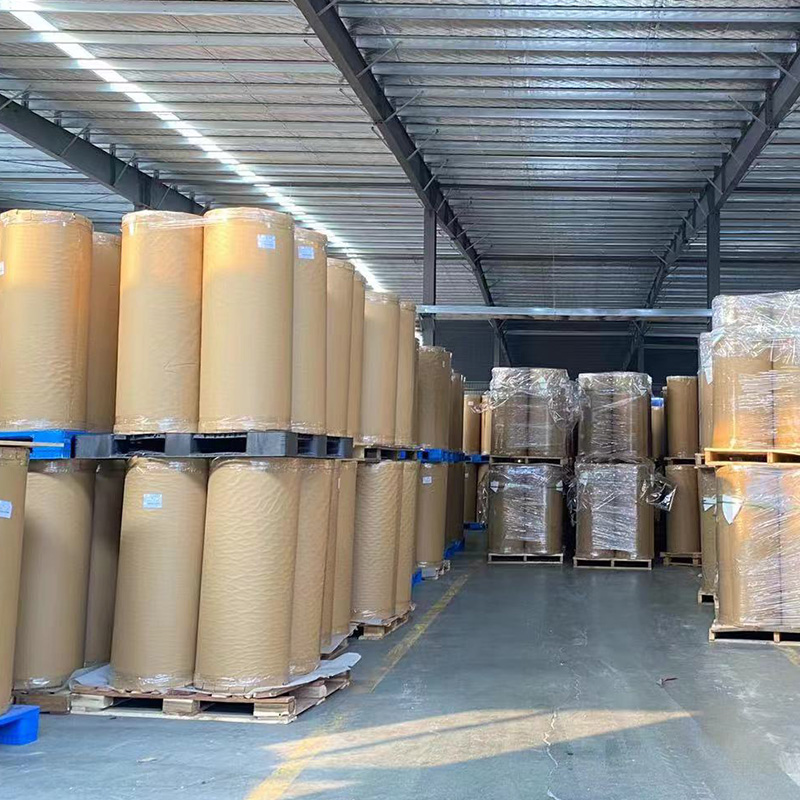
The standard thickness range for BOPP tape jumbo rolls is 35 to 70 microns (μm) for the backing film, with the most common total thickness (film + adhesive) falling between 40 and 65 microns. For general-purpose carton sealing, 45 to 50 microns is the industry benchmark.
Thinner tapes (35-40μm) are used for light-duty packaging or cost-sensitive applications, while thicker tapes (55-70μm) provide extra tear resistance and holding power for heavy or irregular boxes. Premium jumbo rolls often specify a film thickness of 28μm to 30μm combined with an adhesive layer of 15μm to 20μm.
Common Width Specifications
BOPP tape jumbo rolls are typically manufactured in widths ranging from 1000 mm to 1280 mm before slitting. After slitting into finished rolls, the most common widths for end-users are 48 mm, 50 mm, and 72 mm.
- 36 mm to 45 mm – Light-duty envelopes, stationery, and small parcel sealing.
- 48 mm to 50 mm – Standard carton sealing for e-commerce, warehouses, and shipping.
- 72 mm to 75 mm – Heavy-duty industrial boxes, pallet unitizing, and reinforced sealing.
- 100 mm+ – Specialized masking or surface protection applications.
Types of Adhesives Available
BOPP tape jumbo rolls use three primary adhesive systems. Water-based acrylic dominates the packaging industry (over 85% market share), followed by solvent-based acrylic and hot-melt rubber adhesives.
Comparison of adhesive types for BOPP tape jumbo rolls
| Adhesive Type |
Key Feature |
Typical Application |
| Water-based acrylic |
High UV & aging resistance |
General carton sealing, storage |
| Solvent-based acrylic |
Aggressive, quick-stick, high tack |
Recycled cardboard, dusty surfaces |
| Hot-melt rubber |
Low cost, excellent low-temperature bond |
Cold storage, light-duty packaging |
Water-Based vs. Solvent-Based Acrylic Adhesive: Key Differences
The main differences are environmental compliance, initial tack, and aging stability. Water-based acrylic is non-flammable, contains no VOCs (volatile organic compounds), and offers excellent long-term aging (12+ months without yellowing). Solvent-based acrylic provides 30-40% higher initial peel adhesion on contaminated or recycled cardboard but requires solvent recovery systems.
For most automated carton sealing lines, water-based acrylic is preferred because it does not build up on cutting blades. Solvent-based adhesives are reserved for difficult substrates where instant "grab" is critical. In terms of temperature resistance, water-based acrylic performs well from -10°C to 60°C, while solvent-based acrylic can handle -5°C to 70°C with slightly better cold-flow resistance.
Standard Specifications for Peel Adhesion and Holding Power
For BOPP tape jumbo rolls, industry standards (ASTM D3330, PSTC-101) specify a peel adhesion of 5.5 to 7.5 N/25mm on stainless steel and a holding power (shear) of over 24 hours at room temperature under a 1 kg load. High-performance jumbo rolls achieve 8.0+ N/25mm peel and 48+ hours holding power.
- Minimum peel adhesion (general packaging): 4.5 N/25mm on corrugated cardboard.
- Typical holding power (shear): >24 hours at 23°C, 1kg weight (no creep more than 2mm).
- Loop tack (quick-stick): 3.5 to 5.0 N/25mm for automated dispensers.
- Unwind adhesion: 80 to 150 g/25mm (lower unwind for high-speed lines).
Application Differences by Color (Clear, Brown, Blue, Red, Yellow, etc.)
Color choice is not purely aesthetic; it impacts UV resistance, print visibility, and coding contrast. Clear BOPP tape is used when box graphics must remain visible. Brown tape matches standard kraft cartons for a seamless look. Colored tapes (blue, red, yellow, green) serve as warehouse coding, quality-control flags, and tamper evidence.
Typical applications for BOPP tape colors in industrial settings
| Color |
Primary Application |
Practical Advantage |
| Clear |
Retail packaging, printed boxes |
Does not obscure barcodes or logos |
| Brown |
General shipping, e-commerce |
Matches corrugated board, hides dirt |
| Blue / Red / Yellow |
Inventory coding, seasonal packaging |
Instant visual identification by staff |
| Green / Orange |
Quality control, rework indicators |
Flags specific handling instructions |
White and black tapes are also available for thermal transfer printing or UV marking. Note that heavily pigmented colored tapes may have slightly lower tensile strength (reduced by 5-8%) due to pigment loading, but this rarely affects normal carton sealing.
FAQ About BOPP Tape Jumbo Rolls
1. What is the typical length of a BOPP tape jumbo roll?
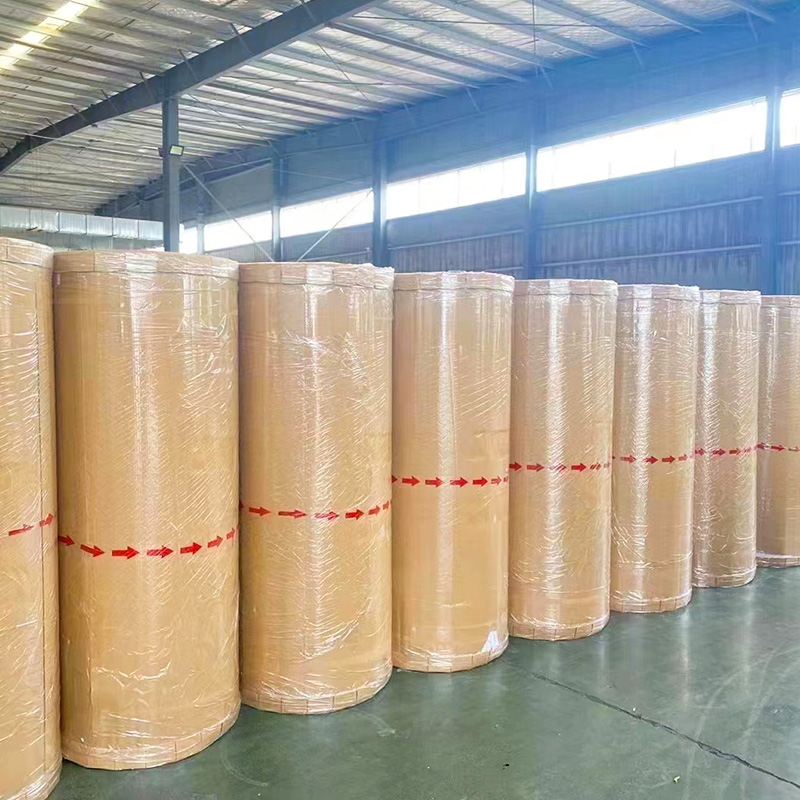
Jumbo rolls (master rolls) are usually 4000 to 6000 meters in length, weighing 600 to 800 kg. After slitting, finished rolls range from 50m to 1500m, with 66m, 100m, and 500m being common for hand dispensers.
2. Can BOPP tape jumbo rolls be recycled?
Yes, BOPP film is recyclable under plastic film programs, but only if the adhesive is water-based acrylic (which washes off). Solvent-based or hot-melt adhesives contaminate recycling streams. Always check local guidelines.
3. How should jumbo rolls be stored?
Store in original packaging at 15-30°C, 40-60% relative humidity, away from direct sunlight. Shelf life is typically 12 to 18 months for water-based acrylic and 8-12 months for solvent-based.
4. What is the core size of BOPP tape jumbo rolls?
Jumbo rolls use 3-inch (76mm) inner diameter cardboard or plastic cores. Finished rolls for hand dispensers use 1-inch (25mm) or 3-inch cores, depending on the dispenser type.
5. Which adhesive performs best in cold environments?
For cold storage (0°C to -20°C), synthetic rubber-based hot-melt adhesives outperform acrylics. Below -10°C, acrylic adhesives become brittle. Special low-temperature BOPP tape with rubber adhesive maintains tack down to -25°C.